
Five Seconds + Fifteen Feet Equal Zero
A human-centred analysis of why FPV drones are so lethal to soldiers: not only because of blast and fragmentation, but because they collapse warning time, rescue access and survivability.
WAR, SECURITY & GEOPOLITICS
Dr Danie Adendorff
6/29/202612 min read
Five Seconds + Fifteen Feet Equal Zero
The Human Lethality of FPV Drone Warfare
By Dr Danie Adendorff DSc (c.h), MSc.
Introduction: the collapse of time
There are phrases that sound like battlefield exaggeration until the casualty chain explains them. Five seconds plus fifteen feet equal zero is one of them.
The phrase is not a universal blast table. No single number can describe every drone strike. Lethality depends on the munition, fragmentation pattern, angle of impact, terrain, cover, body armour, posture, medical support and chance. But as a battlefield description of the FPV-drone age, it captures a hard operational truth. At very short distance, with only seconds of warning, the soldier's decision space collapses. There may be no meaningful time to identify the threat, move, shelter, signal, return fire, or help another man.
The scale of this change is no longer marginal. Ifri's February 2026 Focus stratégique report, Mapping the MilTech War: Eight Lessons from Ukraine's Battlefield, states that drone-inflicted casualties rose from less than 10 per cent of total casualties in 2022 to more than 70-80 per cent by 2025; its comparative table gives losses from drones as under 10 per cent in 2022 and more than 70 per cent of frontline casualties by 2025. That figure should be read carefully: it is a frontline-weighted expert assessment and battlefield indicator, not a centralised casualty registry. Even with that caveat, the direction of travel is unmistakable. The drone is no longer an accessory to the fight. In many sectors, it is the fight. [1]
This article uses drone-delivered explosive injury as the wider category and FPV impact drones as the central focus. Where reporting concerns drone-dropped explosives or attack drones rather than confirmed FPV impact strikes, those cases are used only to illuminate casualty mechanisms and evacuation denial. They are not treated as identical munitions.
The first brutality of FPV drone warfare is the compression of warning time. The second is worse. If the blast does not kill immediately, the drone-saturated battlefield may still finish the work. A soldier may survive the detonation but bleed where no one can safely reach him. He may suffer a chest injury that becomes fatal before evacuation. He may lose consciousness, aspirate blood, suffocate, or deteriorate from internal injury. He may remain alive for hours, or even days, while rescue is delayed because drones watch the roads, tracks, tree lines, trenches, casualty collection points and evacuation routes.
This is why FPV drones cannot be understood only as weapons. They are instruments that compress time before impact and stretch time after injury. They shorten the soldier's warning window and lengthen the casualty's rescue window. Between those two distortions lies much of the new human reality of the war.
The soldier is not a statistic
Statistics are necessary. They show scale, patterns, wound mechanisms, evacuation delay and the changing medical burden of the battlefield. They cannot explain what it means for a wounded man to lie in a trench or tree line listening for the next drone.
That is why the story of Jr. Lt. Ihor Vizirenko matters. In the Wall Street Journal profile used for this article, Vizirenko appears not as an abstract combatant but as a husband, father and officer who has continued to fight through some of the most brutal phases of the war in eastern Ukraine. His unit from Ukraine's 21st Mechanized Brigade held against Russian assaults near Chasiv Yar and later fought near Lyman. His wife and two daughters remain central to why he fights. His logic is simple: if he does not protect them, who will? [2]
That human logic is often absent from technical discussion of drone warfare. Analysts speak of attrition, sensors, loitering munitions, cheap precision, kill chains, electromagnetic resilience, fibre-optic control and counter-UAS systems. Those terms are necessary. But they can obscure the core reality: the target is usually a person with a family, a name, a fear response, a memory and a reason for being there.
FPV drones do not strike 'personnel' in the abstract. They strike men in fighting holes, shattered buildings, vehicles, forests, trenches, casualty collection points and evacuation routes. They strike men who may have written to their children hours before. They strike men who may already be exhausted, hungry, wet, concussed, or psychologically worn down by months of artillery, mines, drones and close assault.
The uniqueness of the FPV-drone battlefield is not only that the weapon is cheap and accurate. It is that the sky has become intimate. The threat is close enough to be heard, sometimes seen, and sometimes understood only in the final seconds.
The first phase: blast, fragmentation and immediate collapse
The immediate lethal effect of an FPV strike normally comes from some combination of blast, fragmentation, impact, heat and the specific munition attached to the drone. Some FPV systems carry repurposed grenades, mortar rounds, RPG warheads, shaped charges, or improvised explosive payloads. Their effects vary. A strike against a vehicle differs from a strike into a trench. A blast in the open differs from a blast inside a dugout, bunker, room, or tree line. A man standing upright is exposed differently from a man prone, behind cover, or inside a vehicle.
Even so, the casualty mechanisms are broadly recognisable. Fragments tear through limbs, neck, face, groin, abdomen, pelvis, chest and head. Blast effects damage air-filled organs. Pressure and impact can cause concussion, traumatic brain injury, ruptured eardrums, pulmonary injury, internal bleeding and disorientation. Heat and secondary fire can burn tissue or ignite equipment. The body may be thrown into hard surfaces. Ammunition, fuel, batteries and surrounding debris may create secondary injury.
Blast medicine has long separated these mechanisms into primary blast effects from overpressure, secondary injury from fragments and debris, tertiary injury from body displacement, and quaternary injury from burns, smoke, dust, toxins and environmental exposure. In practice, these mechanisms overlap. A soldier can be cut by fragments, concussed by blast, burned by ignition, and then immobilised by pain or shock before anyone can reach him. [3]
For those killed instantly, the explanation is often catastrophic disruption of vital structures: head injury, massive chest trauma, major vascular injury, traumatic amputation with rapid exsanguination, or unsurvivable polytrauma.
But the more difficult question is the one at the centre of this article: how do soldiers lose their lives if they are not immediately killed by the explosion? The answer is not simply 'the drone'. The answer is trauma plus time.
The second phase: when survivable wounds become fatal
Combat medicine has long recognised that many battlefield deaths occur before the casualty reaches a surgical facility. Eastridge and colleagues' major study of U.S. battlefield fatalities from Iraq and Afghanistan remains one of the strongest baselines for understanding this problem. Reviewing 4,596 battlefield fatalities from October 2001 to June 2011, the authors found that 87.3 per cent of injury deaths occurred before arrival at a medical treatment facility. Among potentially survivable pre-hospital deaths, acute mortality was overwhelmingly associated with haemorrhage. [4]
That finding is not FPV-specific. It is nevertheless central to the FPV casualty chain.
A soldier can bleed to death from a limb wound, although modern tourniquets have made many extremity bleeds more survivable when applied correctly and quickly. The more difficult wounds are truncal and junctional: bleeding from the chest, abdomen, pelvis, groin, armpit, neck and deep vascular structures that cannot be controlled easily with a simple tourniquet.
This is where drone warfare becomes especially lethal. FPV strikes often produce penetrating fragment wounds in precisely those difficult anatomical regions. A soldier may remain conscious after the strike, speak, crawl, or attempt self-aid. Internally, however, he may already be losing blood into the chest, abdomen, pelvis, or soft tissue spaces. Without rapid control of bleeding, blood replacement, surgery and evacuation, his condition can move beyond recovery.
The next pathway is airway failure. Fragments to the face, jaw, mouth, neck, or upper chest can obstruct the airway. Blood, swelling, tissue damage, unconsciousness, or facial trauma can prevent breathing. A casualty who is alive in the first minutes after injury can die if the airway is not opened, protected, or surgically managed.
Chest trauma is another critical mechanism. Blast and fragments can cause pneumothorax, tension pneumothorax, haemothorax, pulmonary contusion, blast lung, rib fractures and respiratory collapse. Some casualties deteriorate rapidly. Others worsen later as bleeding, swelling, air leakage, or lung injury progresses.
Traumatic brain injury is also central. A soldier may be struck by fragments, thrown by blast, concussed by pressure effects, or injured by secondary impact. Severe brain injury may be immediately fatal. Moderate brain injury may become fatal through loss of consciousness, airway compromise, bleeding, swelling, seizures, or inability to self-evacuate.
Abdominal and pelvic injury can be deceptive. A casualty may initially appear alive, alert and mobile. Yet fragments may have damaged the liver, spleen, bowel, kidneys, bladder, iliac vessels, or pelvic structures. Internal bleeding, contamination, shock, bowel perforation and infection can kill hours or days later if definitive care is delayed.
The point is not that FPV drones create entirely new human biology. They do not. The body still dies from known pathways: bleeding, airway loss, respiratory failure, brain injury, shock, burns and infection. What changes is the tactical environment around the wounded body.
Evacuation denial: the fatal multiplier
The most important operational change is that drones turn casualty evacuation into a targetable event.
A wounded soldier creates movement. Movement attracts attention. Attention invites another strike. A rescue team may expose itself. A vehicle may reveal a route. A stretcher party may become a target. A medical evacuation that once required courage now requires concealment, timing, electronic protection, weather, darkness, deception, route discipline and sometimes uncrewed assistance.
The U.S. Army Medical Center of Excellence captured this problem in its June 2025 Ukraine Medical Lessons Learned Report. The report identifies drone proliferation as creating a technology exclusion zone, complicating medical operations, increasing stress on medics and patients, and making prolonged care essential because evacuation times are extended. It also states bluntly that Army medical forces must address medical battlefield survivability and integrate evacuation planning with protection. [5]
Reuters reported the case of a Ukrainian soldier with the call sign Surovyi, wounded in the leg by an attack drone in Donetsk. His survival did not depend only on the initial injury. It depended on five days of crawling, hiding, covering himself with earth and pine needles, and avoiding further drone detection. The wound began the crisis; the drone-saturated environment prolonged it. [6]
Associated Press reporting from eastern Ukraine shows the same pattern from the medical side. One wounded soldier, Artem Fursov, was injured by an explosive dropped from a drone and reached a stabilisation point only after five days and several kilometres of movement. The same report describes another casualty who arrived too late to be saved, with the anesthesiologist attributing the death to evacuation delay. A commander of the 59th Brigade medical unit, call sign Buhor, was asked whether these conditions had increased mortality among the wounded. His answer was direct: significantly. [7]
That testimony matters because it moves the argument beyond anecdote. The survivor who crawls out is one side of the story. The casualty who arrives too late is the other. Together they show that the drone does not merely wound at the point of impact. It can continue to shape the casualty's fate by controlling movement after injury.
In this environment, the distance from injury to care is no longer measured only in kilometres. It is measured in exposure, drone density, visibility, jamming, terrain, weather, darkness and the probability of being hit again.
Reuters' February 2026 reporting on drone dominance in Ukraine gives the same operational picture. Small FPV drones make movement - including troop rotations, tank movement and evacuations - increasingly deadly. The same report cites a hospital chief in Kharkiv stating that drone threats had pushed average medical evacuation time beyond three days, collapsing the traditional 'golden hour' assumption of battlefield medicine. [8]
This is why the FPV drone is not only a weapon of strike. It is a weapon of denial. It denies movement. It denies rescue. It denies medical confidence. It denies the assumption that a wounded man can be collected in time.
Adaptation under fire
The drone does not always win. Soldiers, medics, engineers and commanders adapt. That adaptation is part of the story and must be acknowledged.
Concealed and underground medical facilities have emerged near the Ukrainian front because casualty care itself has become exposed to strike. The Guardian reported from a stabilisation point six metres below ground near Pokrovsk, where Maj Oleksandr Holovashchenko said the facility treated 30 to 40 patients a day and that almost all were victims of Russian FPV drones. Some had catastrophic limb injuries requiring amputation; others had serious stomach wounds, concussion, or fragment injuries. [9]
Evacuation is increasingly planned around darkness, poor visibility, covered routes, deception and route discipline. Protective netting, electronic warfare support, dispersed stabilisation points, uncrewed ground systems and drone delivery of medical supplies are all part of the wider adaptation cycle. None of these measures removes the danger. They show how hard the medical system is fighting to preserve the wounded soldier's remaining time.
The problem is not simply failure to adapt. The problem is that adaptation itself now operates under observation. A medic may be capable. A surgeon may be ready. Blood, airway equipment and evacuation assets may exist. But the casualty chain still has to cross terrain watched by drones.
The underground hospital is therefore not only a medical solution. It is an operational admission: the medical rear has moved closer to the logic of the front. The ambulance must conceal itself. The medic must manage risk like a combatant. The wounded soldier may have to wait until darkness, weather, electronic cover, or an uncrewed system makes movement possible.
For the soldier, survival depends not only on the wound. It depends on whether the casualty chain can function under observation.
The human meaning of the formula
The human story is not sentimental excess. It is analytically necessary.
Without the human story, FPV-drone warfare becomes a discussion of platforms and counters: fibre-optic links, jamming resistance, thermal detection, mesh nets, payloads, autonomy and production scaling. Those issues matter. They do not explain what the war is doing to soldiers.
The personal accounts show what statistics cannot: the wounded man who cannot lift his head because drones are overhead; the soldier who crawls for days; the medic who cannot move until darkness; the surgeon who works underground; the father who continues fighting because his family's survival is bound to the defence of his country.
This is the deeper meaning of the Vizirenko story. It prevents abstraction. It reminds the reader that the 'personnel casualty' is not a unit of measurement but a human life placed inside a chain of obligation, fear, endurance and sacrifice. A soldier's death is not only a tactical loss. It is a family rupture, a unit trauma, a national wound and a moral fact of war.
The modern battlefield often hides this truth behind screens. Drone operators see targets on video feeds. Analysts see dots, heat signatures, strike clips and battle damage assessments. Public audiences see edited footage, often detached from the casualty chain that follows. The visible strike becomes the story, while the dying that happens afterward remains unseen.
This article argues the opposite. The strike is only the beginning of the human reality. The real measure of FPV-drone lethality includes what happens after impact: bleeding, breathing failure, shock, confusion, pain, waiting, rescue risk, evacuation delay, surgery denied and families who receive the final message.
Five seconds plus fifteen feet equal zero should therefore be read as both an operational and human formula.
Five seconds represents the collapse of warning time. At FPV speed and short range, the soldier may have almost no time to detect, decide and move. Fifteen feet represents the immediate zone in which blast and fragments may leave no practical margin. Zero represents the collapse of survivable decision space at the moment of strike.
But the formula has a second layer. For those not killed instantly, zero may arrive later. It arrives when bleeding cannot be stopped. It arrives when the airway closes. It arrives when chest pressure builds. It arrives when internal injury becomes irreversible. It arrives when the evacuation vehicle cannot move, when the stretcher party is pinned, when drones remain overhead, when daylight makes rescue suicidal, or when the casualty reaches the stabilisation point too late.
That is the final cruelty of FPV-drone warfare. It does not only kill at the moment of impact. It changes the conditions under which survival is possible.
Conclusion: a human-time weapon
The FPV drone has become one of the defining weapons of the contemporary battlefield because it joins cheap precision with intimate proximity. It finds individual soldiers, follows movement, exploits exposure and strikes where traditional weapons may be unavailable, uneconomical, or too slow.
But its true lethality is larger than the explosion.
It is a human-time weapon.
Before the strike, it compresses warning time to seconds. At the strike, it compresses distance to the body. After the strike, it expands evacuation time beyond the limits of trauma survival. It turns rescue into risk. It turns medical delay into a killing mechanism. It turns survivable wounds into fatal outcomes.
That is why this story must be told with both evidence and humanity. The data explains the mechanisms. The soldiers' stories explain the meaning.
Five seconds plus fifteen feet equal zero because, in the FPV-drone battlespace, the soldier may lose not only cover and movement, but time itself. And in war, once time is lost, life often follows.
References and Source Notes
[1] Élie Tenenbaum, Bohdan Kostiuk, Daryna-Maryna Patiuk and Anastasya Shapochkina, Mapping the MilTech War: Eight Lessons from Ukraine’s Battlefield, Focus Stratégique, Ifri, 12 February 2026. The casualty figure is used as a frontline-weighted expert assessment and battlefield indicator, not as a centralised casualty registry.
[2] Alistair MacDonald, Ukraine’s Most Potent Weapon Is the Soldiers Who Refuse to Quit, The Wall Street Journal, 25 June 2026.
[3] Michael R. Jorolemon and Parth J. Patel, Blast Injuries, StatPearls / NCBI Bookshelf, last updated 22 February 2026.
[4] Brian J. Eastridge et al., Death on the Battlefield (2001-2011): Implications for the Future of Combat Casualty Care, Journal of Trauma and Acute Care Surgery, 73(6 Suppl. 5), 2012, S431-S437. DOI: 10.1097/TA.0b013e3182755dcc.
[5] MEDCoE Lessons Learned, Ukraine Medical Lessons Learned Report, The Pulse of Army Medicine, U.S. Army Medical Center of Excellence, 1 June 2025.
[6] Reuters, Five days to get out: Ukrainian soldier’s remarkable escape, 9 September 2025.
[7] Associated Press, High-tech drones turn Ukraine’s front line into a deadly kill zone, complicating evacuations, 18 August 2025; AP reporting republished by Arab News.
[8] Volodymyr Pavlov and Dan Peleschuk, Drones dominate Ukraine battlefield four years into fighting, Reuters, 24 February 2026.
[9] Luke Harding, Six metres below ground: inside the secret hospital treating Ukrainian soldiers injured by Russian drones, The Guardian, 25 October 2025; last modified 26 October 2025.
Author Workflow Disclosure
This article was produced through an AI-assisted but human-directed workflow. AI was used for structuring, language refinement, source synthesis and editorial development. The author retained responsibility for argument, judgement, interpretation and final approval. AI-generated material was not treated as empirical evidence.
Image Declaration
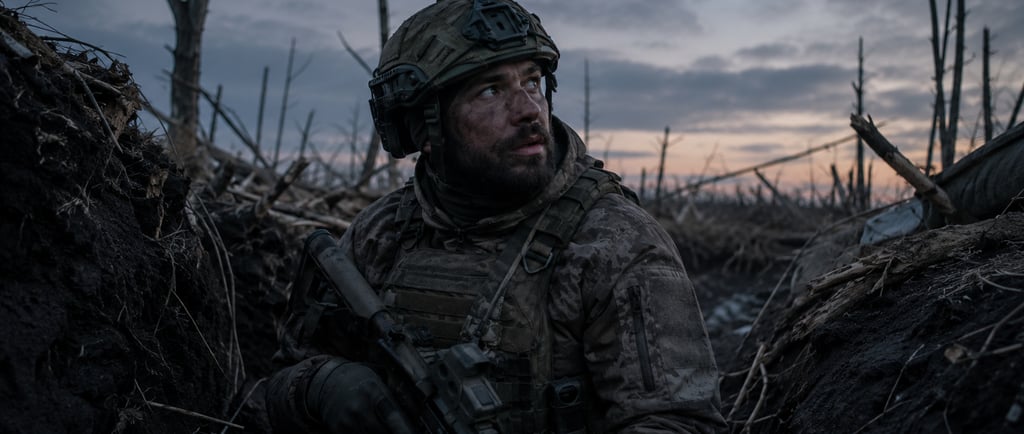
The image accompanying this article/post is AI-generated and is intended for illustration purposes only.


© 2026 Dr Danie Adendorff. All rights reserved.