
The Next Intrusion
A critical essay on how consumer body-scanning technology, framed as wellness and personal benefit, may normalise intimate health-data extraction before medical, privacy and governance safeguards are fully settled.
TECHNOLOGY & AIPOLITICS & SOCIETY
Dr Danie Adendorff
6/21/202613 min read
The Next Intrusion
Body Scans, Beneficial Deception and the Architecture of Health-Control
By Dr Danie Adendorff
“For your own benefit, you will pay for the intrusion; and you will still die.”
That sentence is deliberately severe. It is not a rejection of medicine, prevention, diagnostic science or technological progress. It is a warning against a recurring political and commercial pattern: intrusive systems are rarely introduced to the public as instruments of control. They are introduced as convenience, safety, health, efficiency, protection, empowerment or care. The language is usually benign. The architecture may not be.
The announcement by Midjourney Medical of a proposed full-body scanning system, wrapped in the language of wellness, personal awareness and spa-like access, therefore deserves more than a consumer-technology reaction. It should not be assessed merely as an eccentric pivot by an AI image company into medical hardware. Nor should it be dismissed reflexively as science fiction. The more important question is doctrinal: what happens when the human body itself becomes a recurring data source inside a commercial technology infrastructure?
For factual precision, the present scanner should not be described as an AI machine scanning the body. The imaging method is ultrasound-based, with AI currently described more narrowly as assisting segmentation and potentially improving future analytical functions. The significance remains: an AI image-generation company is proposing to build an intimate body-data platform at scale.
The problem is not that a scanner exists. The problem is that a scan is being repositioned from a medically justified intervention into a casual behavioural routine. The body is no longer examined because a clinician has identified a diagnostic need. It is scanned because the user is invited into a pleasant environment where data capture is normalised, softened and made emotionally acceptable. The scan becomes a side-effect of comfort. The body becomes readable infrastructure. The person becomes a longitudinal dataset.
This is the next intrusion.
The Benefit Frame and the Deception Problem
Modern intrusive technologies seldom arrive with the vocabulary of intrusion. They arrive with a promise. The promise may be genuine, partially genuine or strategically inflated. It may offer safer streets, protected children, reduced fraud, faster travel, better health, personalised services, early disease detection or greater self-knowledge. The difficulty is that the benefit may be real while the governance structure remains dangerous.
This is the central logic of what I have previously called protective deception. In the context of child protection, age verification, digital identity and social-media regulation, the danger was not that harm to children was imaginary. The danger was that real harm could be used as the moral checkpoint through which a wider permission society entered public life. The child became the passport to control. The protective claim softened the public’s resistance to identification, monitoring and access control.
The same structure is visible in health technology. Illness is real. Early detection can save lives. Preventive medicine is valuable. People want to live longer, suffer less and avoid avoidable disease. These are serious aims. Yet precisely because health is morally powerful, it can become the perfect vehicle for intrusive architecture. The more intimate the fear, the weaker the resistance. Few fears are more intimate than the fear of disease hidden inside one’s own body.
The next generation of surveillance may not begin with the camera on the street. It may begin with the invitation to know yourself better.
From Medical Test to Behavioural Ritual
A medically ordered scan exists within a professional context. It has a reason, a risk-benefit assessment, a clinician, a record system, a duty of care, a diagnostic question and a follow-up pathway. It is not merely information. It is information inside a clinical accountability structure.
A consumerised full-body scan changes that context. It transfers imaging from the clinic into the lifestyle domain. It alters the meaning of the act. What was once exceptional becomes routine. What was once justified by symptoms, risk factors or clinical judgement becomes a habit. What was once interpreted inside medicine becomes embedded inside personal optimisation, wellness culture and platform economics.
The shift is not trivial. It is a movement from diagnosis to continuous self-surveillance. The subject is encouraged to monitor the body not because something is wrong, but because something might be wrong, might become wrong, or might be optimised. The result is not necessarily better health. It may be a new anxiety economy in which people pay for reassurance and receive uncertainty.
Whole-body screening has an obvious intuitive appeal. More information appears better than less information. Earlier knowledge appears better than later discovery. But medicine is not governed by intuition alone. Screening only has value when the benefits of detection outweigh the harms of false positives, incidental findings, overdiagnosis, unnecessary procedures, anxiety, cost and diverted clinical attention. The ethical question is not whether the machine can see more. It is whether seeing more improves human outcomes under conditions of evidence, interpretation and care.
There is also a health-equity problem. A spa-based consumer scanning model is likely to attract the affluent worried-well before it reaches populations with the greatest unmet health need. It risks building a data empire on bodies that can afford repeated scanning, while people outside the digital wellness economy remain underserved. The result may be not the democratisation of medicine, but the stratification of bodily visibility: the wealthy become continuously measured, while the medically neglected remain structurally unseen.
The danger of the spa model is that it aestheticises this risk. It converts medical ambiguity into an experience product. Warm water, soft light and convenience alter the emotional setting in which consent is given. The user may feel relaxed, but the data are not relaxed. The data persist, travel, combine, train, classify and potentially govern.
The Body as the Final Data Frontier
Surveillance capitalism began by extracting behavioural traces from search, browsing, location, communication and social interaction. It converted human activity into predictive material. The next frontier is not only what people say, buy, watch or believe. It is what their bodies reveal.
A longitudinal body-scan dataset is not comparable to an occasional photograph or a shopping preference. It may reveal organ structure, body composition, pregnancy, disease indicators, disability, ageing, inflammation, injury, hormonal change, lifestyle patterns, treatment effects and perhaps future risk probabilities. It may also reveal what the individual does not yet know. This is a crucial point. Body data can precede self-knowledge. It may make the platform aware of a person’s vulnerability before the person is.
Nor should such data be treated as easily anonymised. Medical-image privacy research already shows that imaging data may contain identifying anatomical information beyond ordinary metadata, particularly where facial or skull structures are present. De-identification may remove a name, address or file label; it does not necessarily remove the biological uniqueness embedded in high-dimensional volumetric data. This weakens any future defence that intimate body-scan archives are safe merely because they are described as aggregated or de-identified.
That asymmetry is politically and commercially significant. Whoever controls repeated body-imaging data may acquire a form of anticipatory power. They may know when a user is anxious, ageing, deteriorating, recovering, pregnant, high-risk, insurable, employable, vulnerable, suggestible or commercially targetable. Even if the initial company does not intend misuse, the architecture creates value for actors who may: insurers, employers, advertisers, lenders, governments, data brokers, litigants, hostile states and intelligence services.
The body is not merely private. It is strategic.
This is why the claim of benefit cannot be accepted as sufficient. One billion monthly scans would not merely constitute a health service at scale. It would constitute an unprecedented human anatomical data infrastructure. The issue is not only privacy in the narrow sense of whether a name is attached to a file. It is power: who may collect, infer, retain, combine, sell, transfer, train on, regulate, subpoena, classify or deny services on the basis of bodily information.
The Inadequacy of Ordinary Consent
The standard consumer defence is consent. The user agrees. The user pays. The user chooses. The user accepts the terms.
This defence is weak.
Consent in complex digital systems is often procedurally present but substantively thin. Users do not negotiate terms. They do not understand downstream data flows. They cannot predict future secondary uses. They cannot know what later machine-learning systems may infer from data collected today. They cannot foresee acquisition, bankruptcy, policy change, government access, breach, insurance integration, research partnerships or platform migration.
Consent also becomes morally compromised when the technology is framed through fear. A person anxious about cancer, ageing or hidden disease may consent to almost anything if the promise is early warning. In that setting, consent is not meaningless, but it is not enough. It must be supported by institutional duties, regulatory boundaries, independent validation and enforceable data rights.
The deeper issue is contextual integrity. Information disclosed in one context should not silently migrate into another. A person entering a wellness spa may believe they are engaging in self-care. They may not understand that they are contributing to a medical-AI training infrastructure, a commercial prediction system, or a body-data asset base whose future value depends precisely on scale, repetition and inference. The ethical breach occurs when data gathered under one social meaning are repurposed under another.
This is where deception enters. Not necessarily deception as an explicit lie, but deception as framing. The scan is presented as empowerment while the infrastructure is built as extraction. The user is told the story of self-knowledge while the institution accumulates asymmetrical knowledge over the user.
Regulatory Approval Is Not the Whole Question
FDA approval or clearance matters. Medical-device regulation exists because diagnostic claims, safety, accuracy, intended use, labelling and clinical performance cannot be left to marketing enthusiasm. If a system moves from body-composition mapping into diagnostic interpretation, clinical decision-support or disease detection, it enters a higher burden of evidence and oversight.
But regulatory approval, even when obtained, will not resolve the whole problem. A device may be technically cleared and still be socially dangerous if its data architecture is excessive, opaque or permissive. The question is not only whether the machine works. The question is what system the working machine enables.
A reliable scanner can still support a bad governance model. A safe imaging method can still produce unsafe institutional consequences. A clinically useful signal can still become an instrument of exclusion, pricing, manipulation or control. Therefore, the governance test must extend beyond medical-device approval into data minimisation, purpose limitation, auditability, user rights, secondary-use prohibition, deletion rights, independent ethics oversight, breach liability and restrictions on insurance, employment and state access.
The public argument must not be reduced to “Is the scan accurate?” The fuller question is: “Under what conditions would this scanning infrastructure remain legitimate, proportionate, necessary, safe and democratically governable?”
Paying for One’s Own Enclosure
The most disturbing feature of consumer surveillance is that people are often asked to finance the infrastructure that reduces their own autonomy. They buy the device, subscribe to the service, upload the data, accept the terms, train the model and then become subject to the classifications the system generates. The customer is not only the customer. The customer is the input.
This is why the phrase “you are going to pay for it” matters. It captures the economic inversion of modern digital power. The individual pays for convenience while creating an asset for the platform. In the case of body scanning, the person may pay for reassurance while producing high-value anatomical data. The platform receives both revenue and training material. The user receives a report, a dashboard or a visualisation, but may also enter a lifelong regime of comparison, anxiety and nudged behaviour.
The final phrase — “and you will still die” — is not nihilism. It is ethical realism. No scan abolishes mortality. No dataset removes the human condition. Yet the promise of technological health often trades on the fantasy of control over death. The consumer is invited to believe that more monitoring equals more mastery. Sometimes it may. Often it may not. The unresolved question is whether the system improves life, or merely monetises the fear of losing it.
The politics of mortality is powerful. A society afraid of death can be persuaded to accept almost any intrusion if it is presented as prevention. That is why health technology requires stronger, not weaker, governance.
The Human Return Point
This issue connects directly to my wider argument on accountable AI and the Human Return Point. AI and advanced computation may assist human judgement. They may detect patterns, accelerate analysis and support earlier intervention. But they must remain inside a human accountability system. The machine cannot become the judge of the person. The platform cannot become the silent governor of bodily risk. The dataset cannot become an unchallengeable authority.
The Human Return Point is the point at which human judgement, ethical responsibility and accountable authority must re-enter the system before consequence hardens. In medical scanning, that point must appear before data are interpreted, before risk scores are generated, before users are nudged, before data are shared, before insurers or employers gain interest, before public-health authorities seek access, and before AI systems are trained on intimate biological records at scale.
This is not anti-technology. It is anti-abdication.
The more powerful the scan, the greater the duty of human governance. The more intimate the data, the narrower the permissible purpose. The more seductive the benefit, the more rigorous the scrutiny must become.
The Executive Intelligence Pipeline Applied to Body-Data Infrastructure
To convert these structural warnings into actionable governance, strategic leaders require a systematic diagnostic framework. The Executive Intelligence Pipeline provides the necessary discipline to decouple technological hype from structural reality across seven distinct operational thresholds: signal, validation, interpretation, escalation, decision, action and adaptation.
The signal is the announcement itself: a prominent AI company proposes mass-scale full-body scanning through a consumer-friendly wellness model.
Validation asks what is known and what remains unproven. The hardware partnership appears real. The ambition is explicit. The clinical claims require independent evidence. The regulatory path is incomplete. The medical-specific data-governance model appears unresolved.
Interpretation asks what the signal means. This is not merely a product launch. It is a possible attempt to normalise the routine capture of bodily data outside traditional medical institutions.
Escalation asks who must examine the issue. This is not only for consumers or technologists. It belongs on the agenda of medical regulators, data-protection authorities, bioethicists, insurers, health systems, legislators, national-security analysts and civil-society organisations.
Decision asks what must be required before deployment at scale. The answer should include clinical validation, regulatory authorisation where medical claims are made, a dedicated health-data policy, external audit, strict data minimisation, clear deletion rights, prohibition of secondary commercial exploitation without specific consent, and a hard barrier against insurance, employment and coercive state use.
Action asks how these requirements become enforceable. Public concern is not enough. Voluntary assurances are not enough. The architecture must be constrained before the dataset becomes too valuable to dismantle.
Adaptation asks how society learns as the technology evolves. Governance cannot be a one-time approval. It must track new AI capabilities, new forms of inference, new business models and new actors seeking access.
The pipeline exposes the central failure of hype-driven technology adoption: action is often authorised before validation, interpretation and escalation have matured.
The Doctrine of Health-Data Restraint
The proper doctrine for such systems should be health-data restraint. The test is not “Can we collect it?” The test is “Why must this be collected, for whose benefit, under whose authority, for how long, with what safeguards, and with what right of refusal?”
Health-data restraint requires at least seven principles.
First, purpose must be narrow. Data collected for personal health awareness must not become a general-purpose asset.
Second, collection must be minimised. The platform must not retain more than is necessary for the user-facing purpose.
Third, interpretation must be accountable. AI-generated or algorithmic health claims must remain subject to qualified clinical review when they affect medical decision-making.
Fourth, consent must be specific and layered. Consent to receive a scan is not consent to train broad AI systems, sell derived insights, support insurance underwriting, or share data with unrelated third parties.
Fifth, deletion must be real. The individual must have enforceable rights to erase identifiable records and prevent further use, subject only to narrow and legally justified exceptions.
Sixth, access must be restricted. Employers, insurers and state agencies should not gain routine access to full-body scan data.
Seventh, benefit claims must be evidence-disciplined. Marketing must not imply mortality reduction, disease prevention or diagnostic power without robust clinical evidence.
Without these principles, mass scanning risks becoming a velvet architecture of control: comfortable, beautiful, voluntary and dangerous.
Conclusion: Do Not Confuse Illumination with Liberation
The promise of seeing inside the body is powerful. It speaks to fear, hope, control, vulnerability and mortality. It may produce real benefits. It may assist prevention, improve self-knowledge and open new medical pathways. A disciplined critique must allow that possibility.
But illumination is not automatically liberation. To be seen is not necessarily to be empowered. To be measured is not necessarily to be cared for. To possess a dashboard is not necessarily to possess agency. A society can become more informed and less free at the same time.
The next intrusion will not arrive as oppression. It will arrive as service. It will be warm, convenient, softly lit and personalised. It will speak the language of health. It will ask us to pay. It will promise awareness. It will reduce resistance by wrapping extraction in benefit.
The disciplined response is not panic. It is boundary-setting before consequence. Before bodies become infrastructure, society must ask the question that serious governance always asks too late: under what conditions would the logic supporting this technology cease to remain acceptable?
If the answer is not clear before deployment, then the public is not being offered empowerment. It is being invited into an experiment whose real object may not be health, but control.
Sources and Notes
1. Midjourney, “A New Era of Midjourney,” Midjourney Medical, accessed 21 June 2026. Supports the San Francisco spa roadmap, the “side-effect” framing of scanning, the 2031 ambition for more than 50,000 scanners and one billion scans per month, and the company’s own benefit claims. https://www.midjourney.com/medical/blogpost
2. Butterfly Network, “Butterfly Network Provides Commentary on Midjourney Medical’s Full Body Ultrasound Scanner Announcement,” Business Wire, 18 June 2026. Supports the hardware partnership, 40 Ultrasound-on-Chip imaging modules per system, and the previously disclosed agreement with expected payments of up to $74 million over five years. https://www.businesswire.com/news/home/20260618923795/en/Butterfly-Network-Provides-Commentary-on-Midjourney-Medicals-Full-Body-Ultrasound-Scanner-Announcement
3. Business Insider, “Midjourney Unveils a Full-Body Ultrasound Scanner and Spa Concept,” June 2026. Supports the correction that Midjourney is not currently using AI in the scanner and that scanner-specific data policies had not been finalised at the time of reporting. https://www.businessinsider.com/midjourney-medical-scanner-health-care-spa-2026-6
4. The Verge, “Midjourney Medical goes from AI image generation to full-body ultrasounds,” June 2026. Supports the ultrasound-based description, the AI segmentation overlay distinction, the early prototype context, and the point that only about a dozen people had reportedly been scanned at the time of reporting. https://www.theverge.com/ai-artificial-intelligence/952011/midjourney-medical-ai-ultrasound-scan
5. U.S. Food and Drug Administration, “General Wellness: Policy for Low Risk Devices,” final guidance, January 2026. Supports the distinction between low-risk wellness products and functions related to diagnosis, cure, mitigation, prevention or treatment of disease. https://www.fda.gov/regulatory-information/search-fda-guidance-documents/general-wellness-policy-low-risk-devices
6. U.S. Food and Drug Administration, “Premarket Notification 510(k),” FDA medical-device guidance page. Supports the explanation that a 510(k) submission is used to demonstrate substantial equivalence to a legally marketed device and that devices requiring 510(k) clearance may not be marketed until FDA issues an order finding substantial equivalence. https://www.fda.gov/medical-devices/premarket-submissions-selecting-and-preparing-correct-submission/premarket-notification-510k
7. U.S. Preventive Services Task Force, “Recommendation: Lung Cancer: Screening,” 2021. Supports the caution that screening can produce false-positive results, incidental findings, overdiagnosis, additional testing and patient anxiety, even in screening programmes with demonstrated benefit for defined high-risk groups. https://www.uspreventiveservicestaskforce.org/uspstf/recommendation/lung-cancer-screening
8. Helen Nissenbaum, “Privacy as Contextual Integrity,” Washington Law Review, Vol. 79, No. 1, 2004. Supports the conceptual frame that privacy depends on appropriate information flows within specific social contexts rather than secrecy alone. https://digitalcommons.law.uw.edu/wlr/vol79/iss1/10/
9. Shoshana Zuboff, The Age of Surveillance Capitalism: The Fight for a Human Future at the New Frontier of Power, PublicAffairs, 2019. Supports the surveillance-capitalism frame of human experience converted into behavioural data and prediction products. https://www.hbs.edu/faculty/Pages/item.aspx?num=56791
10. Information Commissioner’s Office, “Special category data,” UK GDPR guidance. Supports the treatment of health data and biometric data used for identification as special category data requiring additional safeguards, lawful basis analysis, Article 9 conditions and DPIA consideration where high risk is likely. https://ico.org.uk/for-organisations/uk-gdpr-guidance-and-resources/lawful-basis/a-guide-to-lawful-basis/special-category-data/
11. Kevin Steeg et al., “Re-identification of anonymised MRI head images with face-recognition software,” eClinicalMedicine, 2024 / PubMed record. Supports the caution that certain medical imaging data, especially head MRI data, may remain vulnerable to re-identification even after conventional anonymisation. https://pubmed.ncbi.nlm.nih.gov/39640939/
Source Exclusion Note
The research base for this essay deliberately excluded Wikipedia, Reddit, LinkedIn, YouTube, Medium, Facebook and Substack.
Image Note
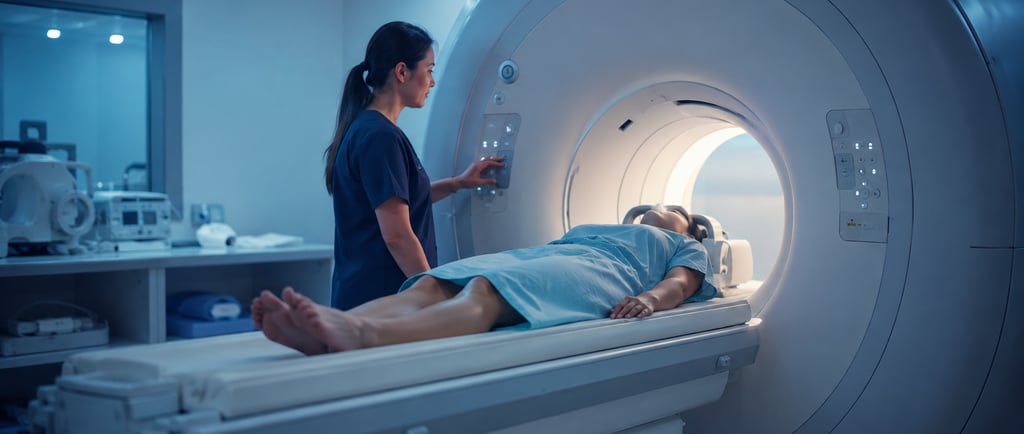
The image accompanying this article is AI-generated and is intended for illustration purposes only.
Author Workflow Disclosure
This essay was produced through an AI-assisted but human-directed workflow. AI support was used for accessibility assistance, structuring, language refinement, source-discovery prompts, revision planning and conversion of editorial comments into amendments. Dr Danie Adendorff retained responsibility for the argument, accepted or rejected changes, checked the logic of claims, assessed source credibility and remains accountable for the final text. AI-generated material was not treated as empirical evidence, and illustrative formulations were not presented as observed data.


© 2026 WDA Publishing. All rights reserved.